Modern Laboratory Systems
Testing is performed using modern laboratory processes designed to support reliable and consistent results.
Disclaimer: This page is intended to support patient understanding and should not replace professional medical advice, diagnosis or treatment.
Most people searching for a urine test or stool test are not looking for medical theory. They simply want to know where the test can be done, how the sample should be collected, whether special preparation is required and when the report will be ready.
At Orbit Diagnostics & Healthcare, Srinagar, urine and stool samples are accepted for a wide range of laboratory investigations. Whether your doctor has advised a routine urine examination, urine culture, 24-hour urine collection, stool examination or another specialised laboratory test, our team can guide you regarding sample collection, preparation requirements and reporting timelines.
For most urine and stool investigations, there is generally no need to schedule a formal appointment.
Simply contact the laboratory, tell us which test has been prescribed and we will guide you regarding sample preparation, collection requirements and the most suitable time to visit.
Once the sample is ready, you can bring it directly to the laboratory during the advised time window.
This happens far more often than people realise.
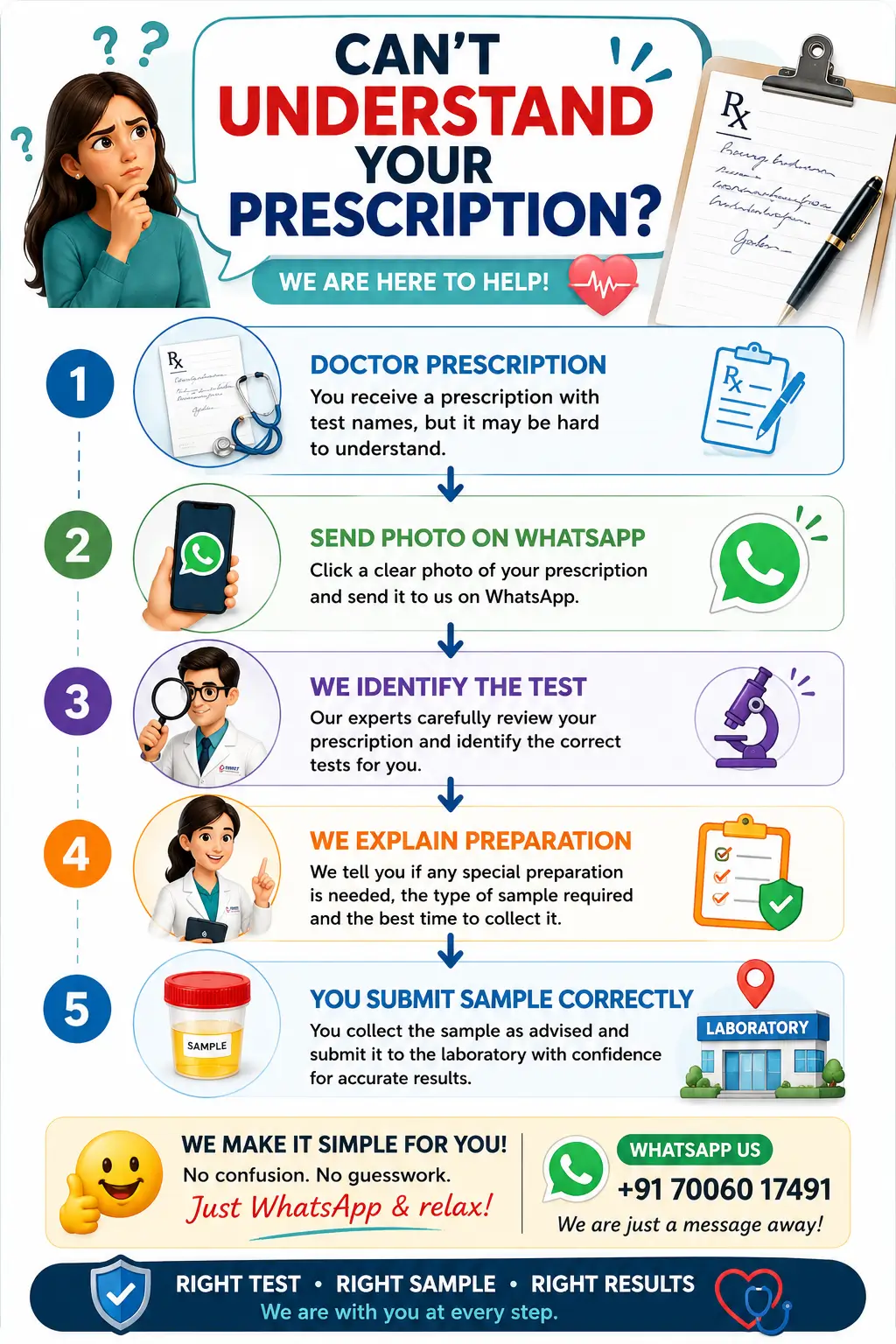
Many laboratory investigations are written using medical abbreviations, technical terminology or handwriting that patients may find difficult to understand.
If you are unsure about the name of the test, simply send us a photograph of the prescription on WhatsApp.
Our team can help identify the investigation, explain what type of sample is required and guide you regarding preparation before collection.
This often prevents mistakes such as collecting the wrong sample, using the wrong container or arriving at the wrong time.
One of the most common reasons for sample rejection is incorrect collection.
Different tests may require completely different preparation methods.
| Question | Why It Matters |
|---|---|
| Should it be an early morning urine sample? | Some tests specifically require the first urine passed after waking. |
| Can I collect the sample after meals? | Certain investigations may have timing requirements. |
| How much urine is needed? | Different tests may require different volumes. |
| What type of container should be used? | The wrong container may affect sample quality. |
| Is this a routine urine test or a culture test? | Collection procedures may differ significantly. |
| Does the test require a 24-hour urine collection? | Special instructions are necessary before collection begins. |
| Can the sample be collected at home? | Many tests allow home collection while some may have additional requirements. |
A quick phone call before collecting the sample can save time, prevent repeat collection and help ensure accurate testing.
The exact cost depends on the test prescribed by your doctor.
For this reason, we always recommend sharing the prescription before discussing pricing.
| Type Of Test | Complexity | Typical Cost Category |
|---|---|---|
| Routine Urine Examination | Basic | Lower |
| Urine Culture & Sensitivity | Moderate To Advanced | Higher |
| Microalbumin Testing | Specialised | Moderate |
| 24-Hour Urine Analysis | Specialised | Moderate To Higher |
| Urine Profiles | Multiple Parameters | Variable |
For current pricing, simply send your prescription or test name and our team will provide the latest charges.
The same principle applies to stool investigations.
A routine stool examination generally differs from a stool culture, antigen test or specialised laboratory investigation.
Different testing methods require different laboratory resources, which can influence both the cost and reporting timeline.
If you are unsure about the investigation written on your prescription, simply share it with us and we can explain the test requirements before you visit.
Testing is performed using modern laboratory processes designed to support reliable and consistent results.
Correct sample collection guidance helps reduce errors that can affect test accuracy.
Many routine investigations are available the same day, while specialised tests may require additional processing time.
Our staff assists patients regarding sample preparation, collection requirements and report availability.
One of the biggest misunderstandings patients have is assuming that every urine test is the same.
In reality, doctors may prescribe many different types of urine investigations depending on the condition being evaluated. The preparation, sample collection method, reporting time and cost can vary significantly from one test to another.
This is why we always recommend contacting the laboratory before collecting the sample if you are unsure about the requirements.
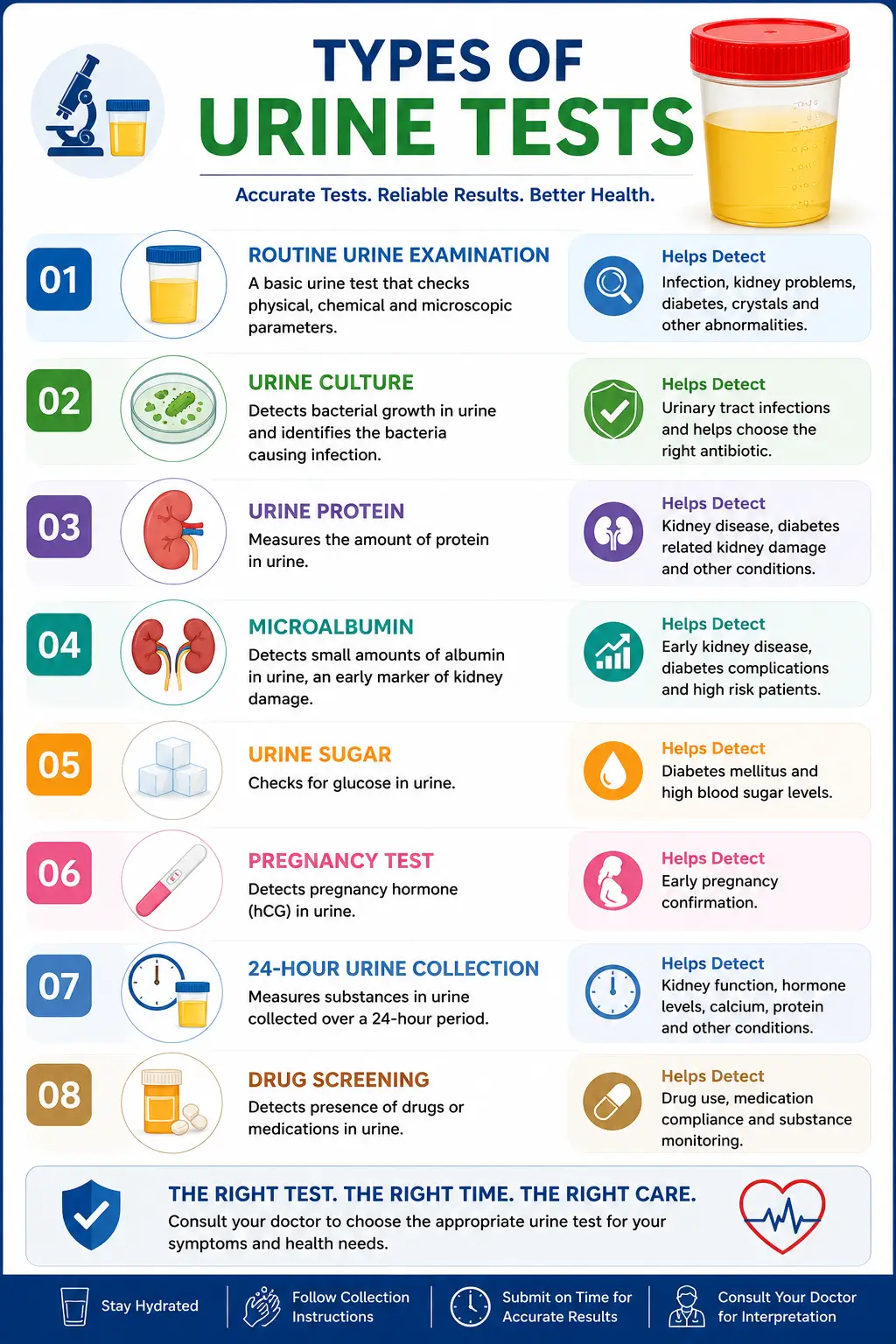
| Common Urine Test | Purpose |
|---|---|
| Routine Urine Examination (Urine R/E) | General evaluation of urine including infection, sugar, protein and other abnormalities. |
| Urine Culture & Sensitivity | Identification of bacterial infection and antibiotic sensitivity testing. |
| Urine Protein | Assessment of protein loss through urine. |
| Urine Microalbumin | Commonly used in diabetes and kidney monitoring. |
| Urine Pregnancy Test | Detection of pregnancy-related hormones. |
| Urine Sugar | Assessment of glucose presence in urine. |
| 24-Hour Urine Collection | Measurement of substances that require collection over an entire day. |
| Urine Drug Screening | Detection of specified substances depending on the prescribed panel. |
| Feature | Routine Urine Test | Urine Culture |
|---|---|---|
| Purpose | General urine examination | Detect bacterial infection |
| Collection Method | Standard sample | Requires careful collection technique |
| Sterile Container | Usually preferred | Often essential |
| Reporting Time | Usually faster | May require additional incubation time |
| Preparation Requirements | Usually simple | May require additional instructions |
Many patients mistakenly believe that a routine urine sample and a urine culture sample are collected exactly the same way.
Because culture testing is designed to identify microorganisms, the collection process often requires greater attention to cleanliness and handling.
If your prescription mentions words such as "Culture", "C/S" or "Culture & Sensitivity", it is always advisable to speak with the laboratory before collecting the sample.
Some specialised investigations cannot be performed using a single urine sample.
Instead, the laboratory may require urine collected over an entire 24-hour period.
This type of testing is commonly prescribed when doctors need to measure substances that fluctuate throughout the day.
Because collection begins at a specific time and continues for the next 24 hours, it is important to receive instructions before starting.
Our staff can explain the process step-by-step so that the sample is collected correctly the first time.
Just like urine investigations, stool testing includes many different examinations depending on the doctor's clinical requirements.
| Test | Common Purpose |
|---|---|
| Routine Stool Examination | General assessment of stool sample. |
| Stool Occult Blood Test | Detection of hidden blood in stool. |
| Stool Culture | Identification of certain infectious organisms. |
| Stool Ova & Parasite Examination | Assessment for intestinal parasites. |
| Stool Reducing Substances | Specific metabolic evaluations. |
| Stool Antigen Tests | Detection of particular infections. |
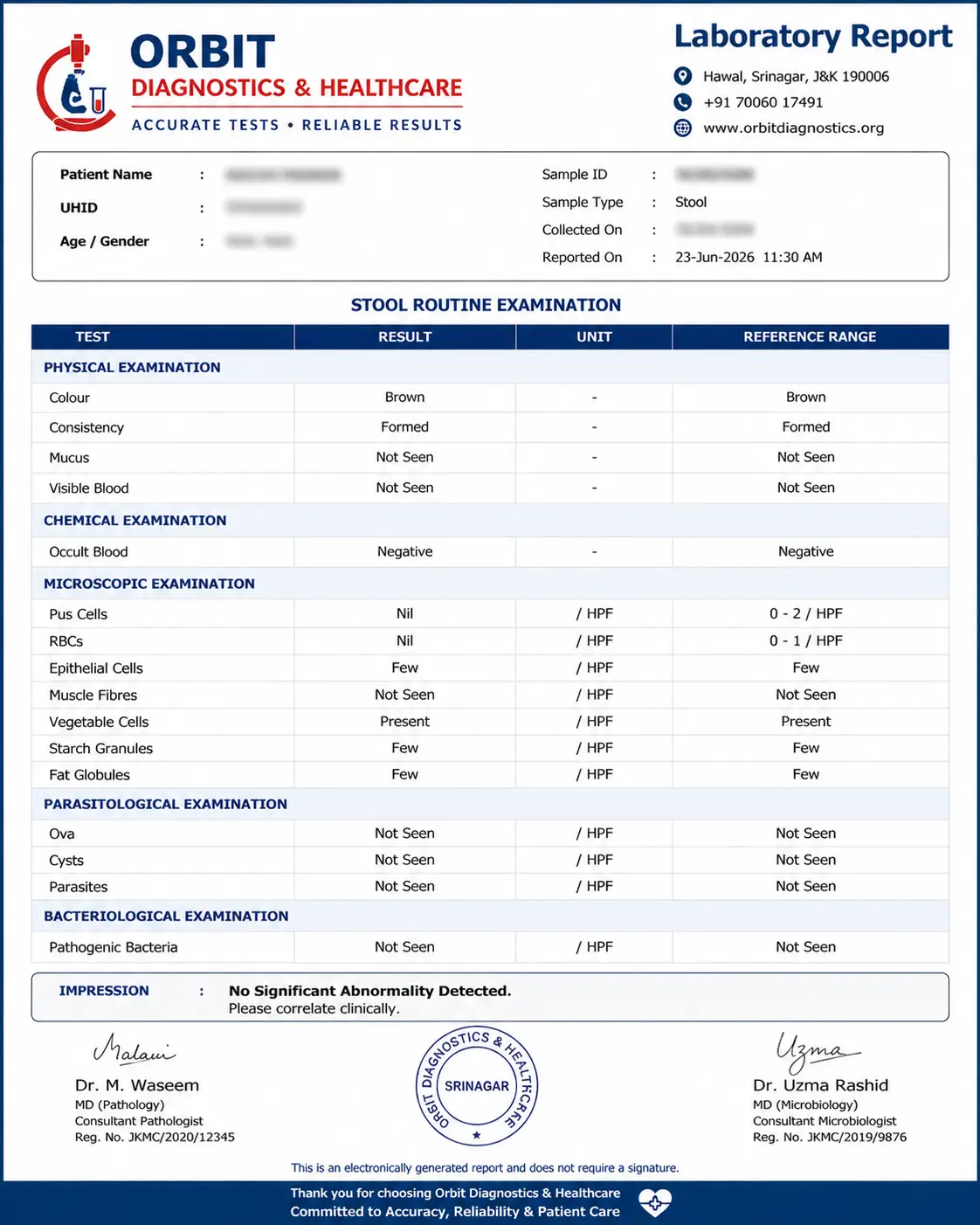
Certain urine investigations may require additional attention to sample collection technique in order to reduce contamination and improve sample quality.
If any guidance is required before sample collection, patients are encouraged to contact the laboratory. Instructions can be explained in simple language before the sample is collected.
Where appropriate and feasible, female staff assistance can be made available for female patients requiring guidance regarding sample-related procedures.
Yes, home sample collection may be available for eligible investigations depending on the type of test and location.
If visiting the laboratory is difficult because of age, illness, mobility concerns or personal circumstances, please contact us and discuss the requirement with our team.
We will advise whether home collection is possible for the prescribed investigation and explain the next steps.
One question we hear almost every day is:
"Why does one urine test cost a few hundred rupees while another costs much more?"
The answer is simple: not all laboratory tests are the same.
Some investigations involve a straightforward examination of the sample, while others require specialised equipment, additional reagents, microscopic evaluation, culture techniques, incubation periods or multiple analytical steps.
As a result, the cost of testing can vary depending on the complexity of the investigation and the amount of laboratory work involved.
Routine examinations are generally quicker to perform and often cost less than specialised investigations.
Some tests require organisms to grow under controlled laboratory conditions before analysis can be completed.
Certain investigations involve advanced laboratory techniques and dedicated reagents.
Profiles often include multiple laboratory measurements rather than a single parameter.
Patients regularly visit Orbit Diagnostics & Healthcare from Srinagar and surrounding areas for laboratory investigations.
Samples are commonly received from Baghat, Rawalpora, Natipora, Hyderpora, Chanapora, Barzulla, Bemina, Nowgam, Rangreth, Humhama, Budgam, Ganderbal, Pulwama, Shopian, Anantnag, Kulgam, Baramulla, Bandipora, Kupwara and nearby areas.
If you are unsure whether home collection is available in your area, please contact us before scheduling the test.
This is usually the second question patients ask after discussing sample collection.
| Type Of Investigation | Typical Reporting Timeline |
|---|---|
| Many Routine Tests | Often Available The Same Day |
| Some Investigations | Within A Few Hours |
| Culture-Based Tests | May Require Additional Time |
| Specialised Tests | Depends On Laboratory Requirements |
When you contact us regarding your test, we will normally inform you about the expected reporting time before the sample is submitted.
This helps patients plan their day and avoid unnecessary waiting.
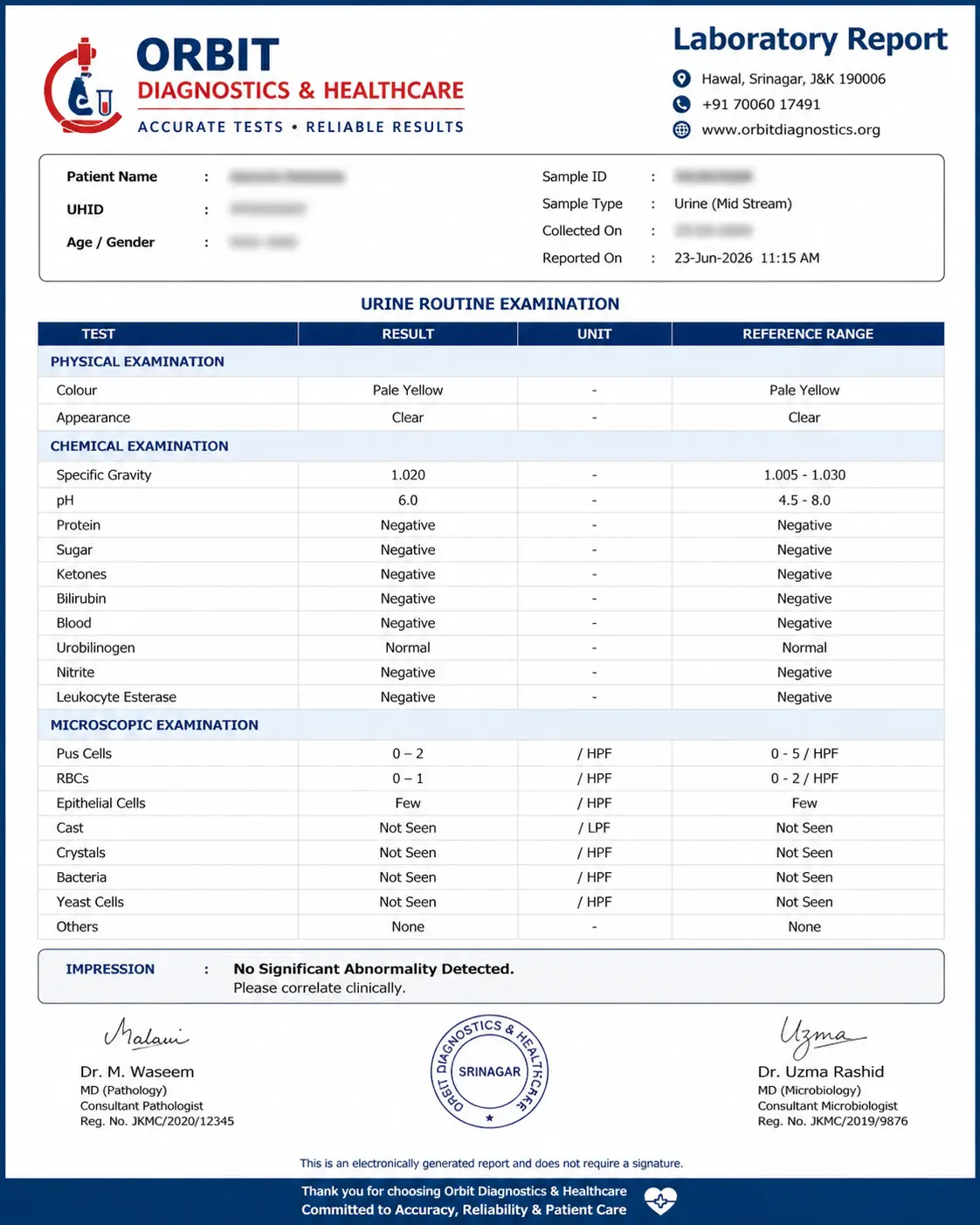
Many patients hand over their sample and naturally wonder what happens next. While the testing process may vary depending on the investigation requested, laboratory testing generally follows a structured workflow designed to support accurate processing and timely reporting.
The sample is received by the laboratory team and checked against the requested investigation to ensure the correct testing process is followed.
The sample is prepared and processed according to the requirements of the prescribed test. Different investigations may involve different laboratory methods and procedures.
Results are reviewed as part of the laboratory workflow before reports are finalised. Additional verification may be required for certain investigations.
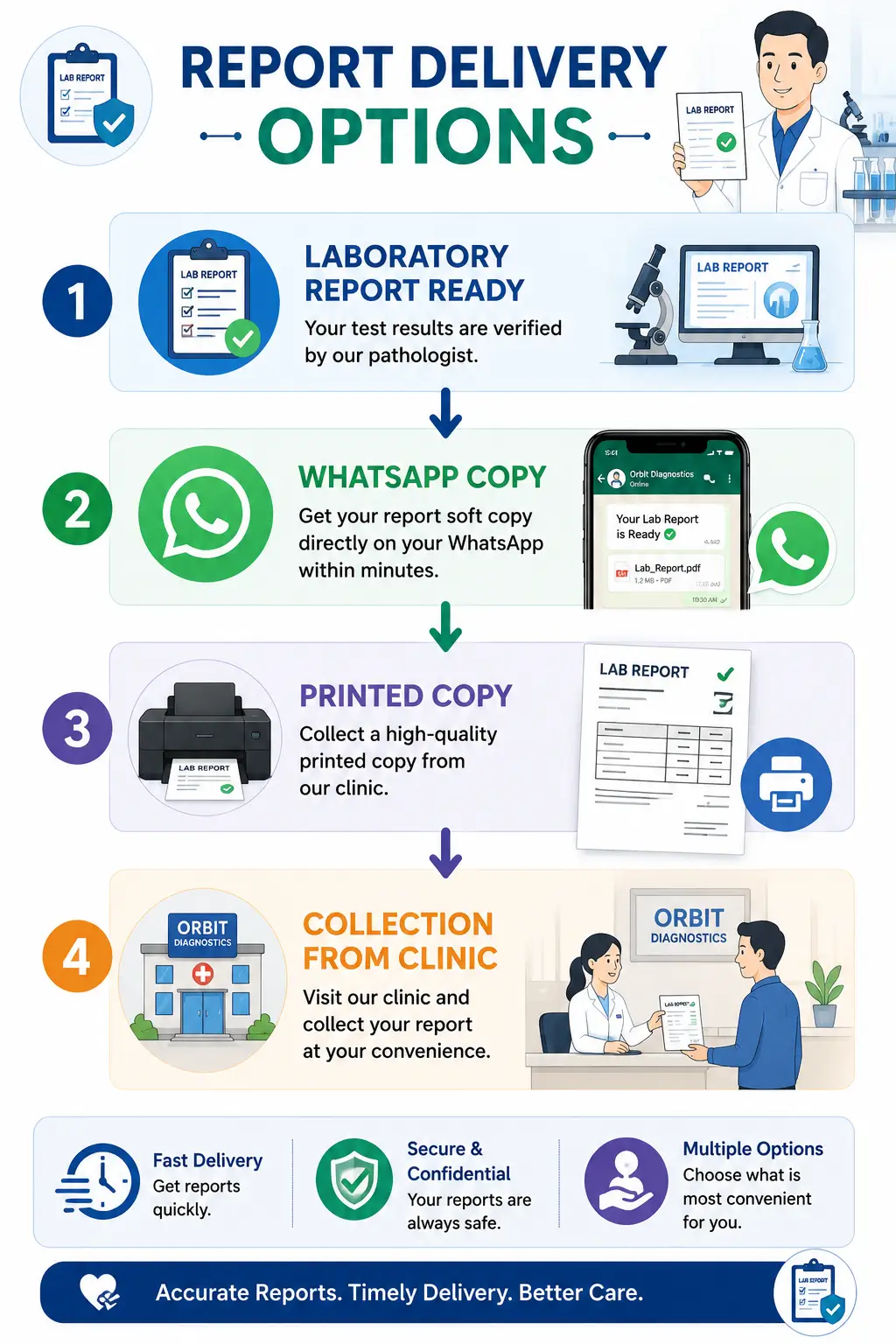
Once processing and verification are complete, the laboratory report is prepared and made available according to the expected reporting timeline.
Reports may be shared through available reporting channels such as WhatsApp, digital copies or printed reports for collection from the clinic.
Reporting times vary depending on the type of investigation. Many routine laboratory tests are available the same day, while specialised investigations and culture-based studies may require additional processing time.
Reports can be shared electronically where appropriate.
Patients can collect a hard copy from the clinic.
Electronic report sharing may be available depending on the investigation.
Where feasible, alternative arrangements may sometimes be discussed.
Please discuss your preferred reporting method with the laboratory team when submitting your sample.
Patients often ask whether payment must be made before testing.
For many routine investigations, patients can complete the testing process and settle payment when reports are issued.
Multiple payment methods are generally available for convenience.
| Payment Method | Available |
|---|---|
| Cash | ✓ |
| UPI | ✓ |
| Google Pay | ✓ |
| PhonePe | ✓ |
| Bank Transfer | ✓ |
Availability of payment methods may vary and patients are welcome to confirm current options when visiting.
Patients receive practical advice regarding preparation, sample quantity and collection requirements.
Routine, specialised and profile-based urine and stool testing services are available.
Many commonly requested investigations are reported promptly.
Staff remain available to answer questions before and after sample submission.
Structured processes help support consistency and quality throughout testing.
Home collection options may be available for eligible investigations and locations.
A laboratory result is only as good as the sample received. Even the most advanced testing equipment cannot compensate for an incorrectly collected sample.
Following the correct collection method helps improve sample quality and reduces the possibility of repeat collection.
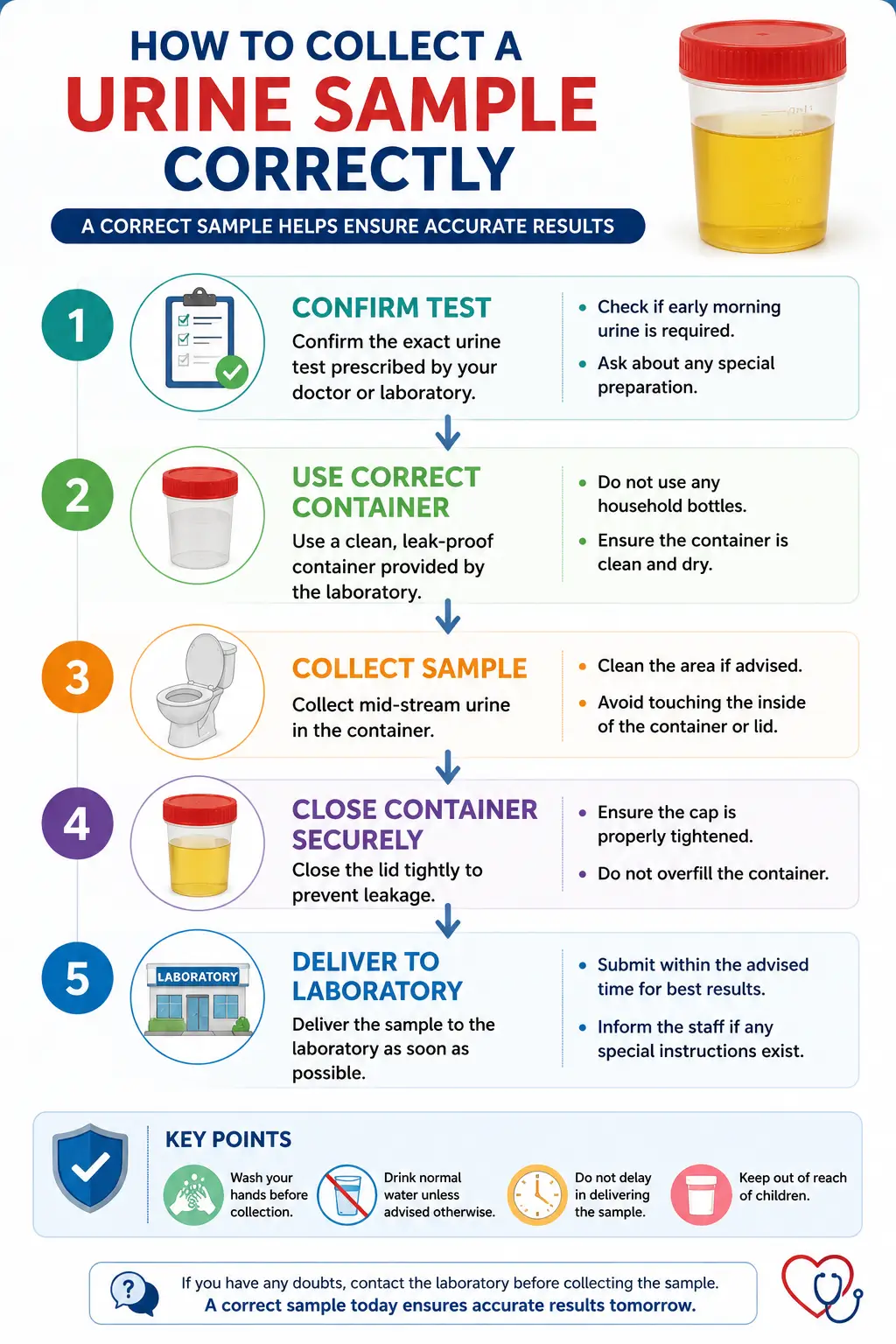
Before collecting the sample, confirm exactly which urine test has been prescribed.
Some investigations require early morning urine while others may not.
Always use a suitable clean collection container as advised by the laboratory.
Follow the instructions provided for the specific investigation.
Ensure the sample can be identified correctly.
Bring the sample to the laboratory within the advised time period.
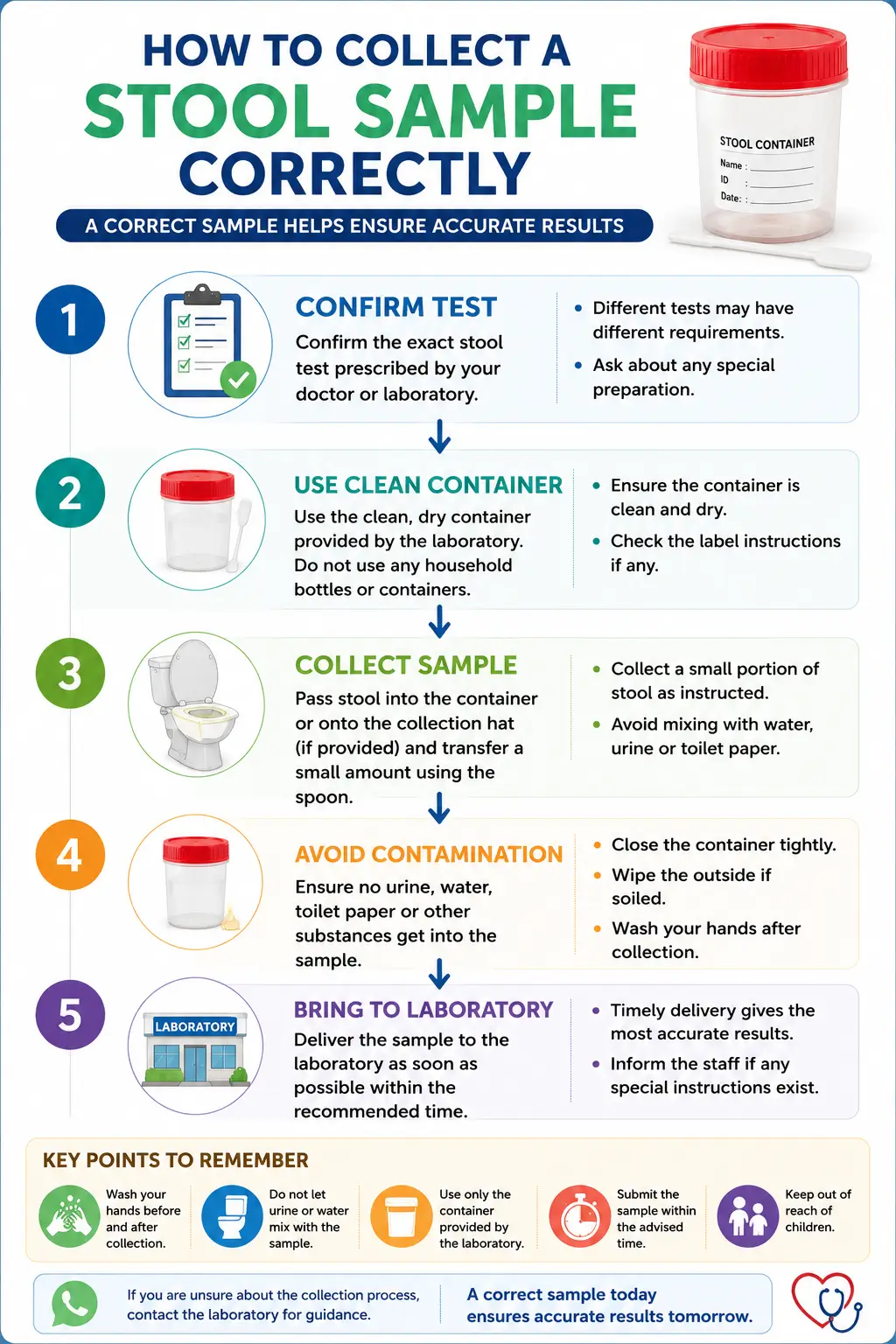
Proper collection is equally important for stool investigations.
Different stool investigations may have different collection requirements. Some require only a small sample while others may require special containers or additional instructions.
Patients are encouraged to contact the laboratory before collection if they are uncertain about the process.
This is one of the most common questions patients ask.
The answer depends entirely on the test being performed.
Some investigations require only a small quantity of urine or stool, while others require larger volumes or special collection methods.
For example, a routine urine examination is very different from a 24-hour urine collection study.
Rather than guessing, it is always better to contact the laboratory before collection. Our staff can explain the exact amount required for your specific investigation.
| Type Of Sample | What It Means |
|---|---|
| Early Morning Urine | Collected soon after waking up, before normal daytime activities begin. |
| Random Urine Sample | Collected at a convenient time during the day as instructed. |
| 24-Hour Collection | Collected over an entire day according to specific instructions. |
Not every test requires an early morning sample. Always verify the requirement before collection.
Using an unsuitable container can affect sample acceptance.
Collecting the sample at the wrong time may require repeat collection.
Providing too little sample may delay processing.
Waiting too long before delivering the sample can affect certain investigations.
Patients sometimes assume a test is routine when special preparation is actually required.
A quick phone call beforehand often prevents unnecessary repeat collection.
A short phone call can help avoid the most common mistakes in urine and stool sample collection.
Our team can explain:
This guidance is often the easiest way to ensure the sample is collected correctly the first time.
Many patients receive a prescription and are unsure what the laboratory test actually means. Doctors often use abbreviations, short forms or technical terminology that may not be familiar to everyone.
The tables below explain some of the most common urine and stool test names seen on prescriptions. If your prescription contains a term that is not listed here, simply contact us or share a photo of the prescription and our team will help identify the test and explain any preparation requirements.
Patients frequently search online for the exact terms written on their prescription. The following table explains some of the most commonly prescribed urine investigations.
| Written On Prescription | Common Meaning |
|---|---|
| Urine R/E | Routine Urine Examination |
| Urine C/S | Urine Culture & Sensitivity |
| U/A | Urinalysis |
| Urinalysis | Routine Urine Testing |
| Urine Protein | Protein Assessment |
| Urine Sugar | Glucose Screening |
| Microalbumin | Kidney Monitoring Test |
| Urine Ketones | Ketone Assessment |
| 24-Hour Urine | Twenty-Four Hour Urine Collection Study |
| Urine Pregnancy Test | Pregnancy Hormone Screening |
Stool investigations are also commonly written using abbreviations. Understanding the terminology can help you prepare the correct sample and avoid confusion before visiting the laboratory.
| Written On Prescription | Common Meaning |
|---|---|
| Stool R/E | Routine Stool Examination |
| Stool C/S | Stool Culture & Sensitivity |
| OBT | Occult Blood Test |
| FOBT | Fecal Occult Blood Test |
| Ova & Parasite | Parasite Examination |
| Stool Microscopy | Microscopic Stool Examination |
| Stool Antigen Test | Detection Of Specific Infectious Markers |
If you are unable to understand the test name written on your prescription, there is no need to guess. Simply send us a clear photograph of the prescription and we can help identify the test, explain the required sample type, advise on preparation and tell you when the sample should be brought to the laboratory.
Patients occasionally wonder why a laboratory asks for a repeat sample. In many situations the reason is not the patient or the test itself, but simply that the sample does not meet the requirements needed for accurate analysis.
The sample was collected in a container not suitable for the investigation.
The amount submitted was not enough for the requested test.
The sample was not collected at the required time.
The sample reached the laboratory later than recommended.
The following questions are based on real concerns patients commonly have before collecting and submitting urine or stool samples.
In most cases, no appointment is required. You can contact the laboratory, confirm the test requirements and then bring the sample during the advised time period.
Yes. If you are unsure about the test written by your doctor, you can share the prescription and our team can explain the investigation and any preparation requirements.
Many prescriptions contain medical abbreviations or technical terms. If you are uncertain, simply contact the laboratory and share the prescription for guidance.
No. Some investigations require an early morning sample while others do not. It is important to confirm the requirement before collecting the sample.
The answer depends on the investigation being performed. Some tests have timing requirements while others do not.
The required volume varies between tests. Contact the laboratory before collection for specific instructions.
The correct container depends on the test being performed. Using the wrong container can affect sample acceptance.
It is generally advisable to use an appropriate sample container as recommended by the laboratory.
A 24-hour urine collection involves collecting urine over an entire day according to specific laboratory instructions.
You should inform the laboratory. In some situations the collection may need to be repeated.
Many urine samples can be collected at home provided the correct instructions are followed.
This depends on the investigation. The laboratory can advise the recommended delivery timeframe.
Storage requirements vary depending on the test. Always confirm instructions before collection.
A routine urine examination evaluates general urine characteristics, while a urine culture is used to identify certain microorganisms and may require different collection procedures.
Culture testing often requires additional laboratory processing time compared with routine investigations.
If you are taking medications and are unsure whether they may affect the investigation, please discuss this with your doctor or the laboratory.
Requirements vary depending on the investigation. The laboratory can explain any preparation needed.
The quantity required depends on the specific investigation being performed.
Yes. Most stool samples are collected at home and then delivered to the laboratory according to instructions.
Yes. Patients commonly bring urine and stool samples directly to the laboratory.
Home collection may be available for eligible investigations and locations. Please contact the laboratory for details.
Yes. The expected reporting timeline is usually explained when the sample is submitted.
Many routine investigations are available on the same day, while specialised tests may require additional time.
Electronic report sharing may be available. Please discuss your preferred reporting method with the laboratory team.
Yes. Printed reports can be collected from the clinic once they are ready.
For many routine investigations, payment can often be completed when reports are issued. Please confirm details with the laboratory.
Cash, UPI and other digital payment methods are generally available for patient convenience.
Where appropriate and feasible, female staff assistance may be available for female patients requiring guidance.
Urine and stool laboratory investigations are available at Orbit Diagnostics & Healthcare, Srinagar.
Medical content published by Orbit Diagnostics & Healthcare is reviewed periodically to help ensure accuracy, relevance and alignment with accepted diagnostic imaging practices.
Lead Medical Reviewer
Dr. Ujala Gulzar
MBBS, MD
Note: Content is intended for educational purposes and does not replace professional medical advice, diagnosis or treatment.