What Is The Difference Between A Doppler Ultrasound And A Regular Ultrasound?
A routine ultrasound primarily evaluates anatomy, while a Doppler study adds information about blood flow within arteries and veins.
Disclaimer: This page is intended to support patient understanding and should not replace professional medical advice, diagnosis or treatment.
Many patients hear the term "Doppler study" for the first time only after a doctor recommends one. The name sounds technical, and it often leads to questions. Is it different from a routine ultrasound? Why is blood flow being examined? What exactly are doctors looking for? Unlike a standard ultrasound that primarily creates images of organs and tissues, a Color Doppler ultrasound adds another important layer of information. It helps healthcare professionals evaluate how blood is moving through arteries and veins in different parts of the body. This ability to visualize blood flow can be extremely valuable. In some situations, symptoms may not be caused by the structure of an organ itself but by changes in circulation. A Doppler study can provide information that may not be visible on a routine ultrasound examination alone. Understanding why doctors request Doppler studies can help patients approach the examination with greater confidence and a clearer understanding of its purpose.
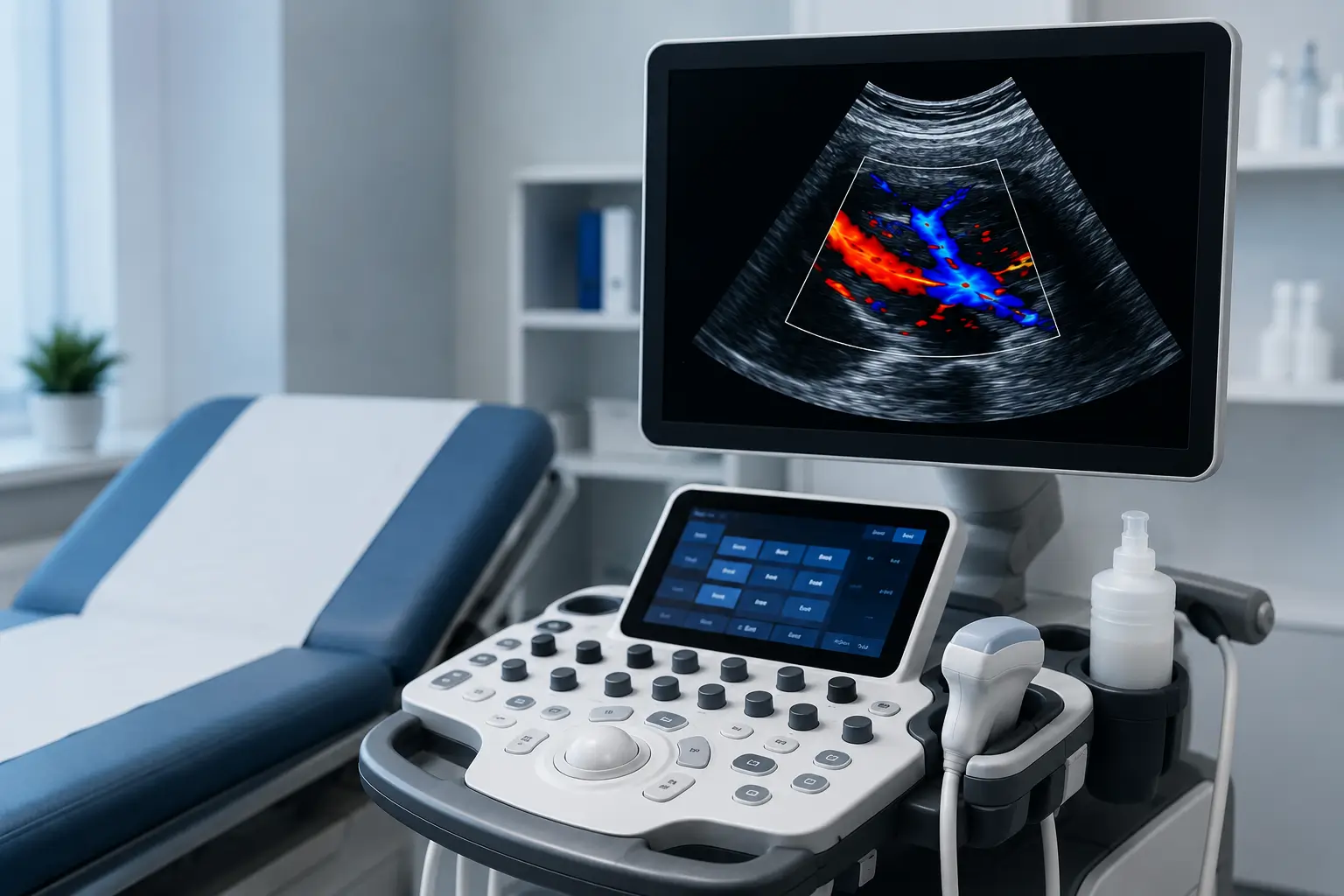
A Doppler study is a specialized ultrasound examination that evaluates blood flow within blood vessels. The technology is based on the Doppler effect, a principle that allows ultrasound equipment to detect movement within the body. When blood cells move through an artery or vein, the returning sound waves change slightly. Modern ultrasound systems analyze these changes and convert them into information that healthcare professionals can interpret. In many cases, the results are displayed using color overlays on the ultrasound image. This is why the examination is often referred to as a Color Doppler ultrasound. The study may provide information about the direction, speed and characteristics of blood flow. This additional information can be extremely useful when evaluating circulation-related conditions.
Patients often assume that a Doppler study and a routine ultrasound are completely different examinations. In reality, they are closely related. A standard ultrasound focuses primarily on anatomy. It helps healthcare professionals visualize organs, tissues and structures inside the body. A Doppler study builds upon those images by providing information about movement within blood vessels. For example, a routine ultrasound may show the appearance of a blood vessel. A Doppler study may help assess how blood is flowing through that vessel. This combination of anatomical imaging and blood flow assessment allows healthcare professionals to gain a broader understanding of certain medical conditions.
Every organ in the body depends on a reliable blood supply. Blood delivers oxygen and nutrients while carrying away waste products. When circulation changes, symptoms may develop even if the organ itself appears structurally normal. For this reason, blood flow assessment has become an important component of modern diagnostic imaging. Healthcare professionals may request a Doppler study when symptoms suggest that circulation could be contributing to a patient's condition. The examination can provide valuable information that helps guide further evaluation and clinical decision-making. Rather than replacing conventional ultrasound, Doppler imaging adds another layer of understanding that may assist healthcare providers in assessing the situation more completely.
There is no single reason a doctor may request a Doppler ultrasound. The examination is used across many different medical specialties because blood flow influences numerous organs and body systems. A vascular specialist may request a Doppler study to evaluate circulation in the legs. An obstetrician may use Doppler ultrasound during pregnancy. A physician investigating abdominal symptoms may request Doppler assessment of specific vessels supplying internal organs. The following sections explore some of the most common situations where healthcare professionals may recommend a Color Doppler ultrasound examination.
Pregnancy is one of the most widely recognized applications of Doppler ultrasound. Throughout pregnancy, healthcare professionals monitor not only the baby's growth but also the circulation that supports development. Blood flow through the placenta and umbilical cord plays an important role in delivering oxygen and nutrients to the developing baby. In selected situations, a Doppler study may be recommended to assess blood flow patterns during pregnancy. The information obtained may help healthcare providers better understand certain aspects of maternal and fetal circulation. Many expectant parents become familiar with Doppler ultrasound after being advised to undergo a specialized pregnancy assessment in addition to a routine obstetric scan.
One of the most common reasons doctors recommend a Doppler ultrasound is to investigate symptoms affecting the legs. Patients may experience pain while walking, unusual cramping, feelings of heaviness, numbness or changes in skin appearance. While many different conditions can produce these symptoms, circulation is often an important consideration. A Doppler study allows healthcare professionals to assess blood flow within arteries and veins of the lower limbs. By examining circulation patterns, doctors may obtain valuable information that contributes to a broader clinical evaluation. Not every case of leg pain is caused by a blood flow problem. However, when circulation is suspected, Doppler ultrasound often becomes one of the first imaging investigations considered.
A Doppler ultrasound is frequently requested when healthcare professionals need to evaluate for deep vein thrombosis, commonly referred to as DVT. DVT occurs when a blood clot develops within a deep vein, most often in the legs. Symptoms may include swelling, discomfort, warmth or changes affecting one limb. Because these symptoms can have multiple causes, imaging is often necessary to help determine whether further medical attention is required. Ultrasound technology is particularly useful for evaluating veins because it allows healthcare professionals to visualize blood flow and assess vessel characteristics without exposing the patient to ionizing radiation. When prompt assessment is important, Doppler ultrasound is often one of the preferred diagnostic tools.
Varicose veins are common, particularly among adults who spend long periods standing, have a family history of vein-related conditions or have experienced pregnancy. Although visible veins may be the most obvious concern, healthcare professionals are often interested in understanding how blood is moving through the underlying venous system. A Doppler study can help evaluate circulation within superficial and deep veins while providing information about blood flow patterns. This assessment may assist healthcare providers when considering management options or determining whether additional evaluation is appropriate. For many patients, the examination provides a clearer understanding of the underlying circulation associated with visible vein changes.
The carotid arteries are major blood vessels located in the neck that supply blood to the brain. Healthcare professionals may recommend a carotid Doppler study when evaluating certain neurological symptoms or when assessing vascular health in individuals with specific risk factors. During the examination, blood flow within the carotid arteries is evaluated using ultrasound technology. The study provides information regarding circulation through these important vessels and may assist healthcare professionals in understanding blood flow patterns affecting the brain. Because the examination is non-invasive and does not involve radiation exposure, it is widely used as a diagnostic imaging tool in appropriate clinical situations.
Blood flow assessment is not limited to the arms and legs. Doppler ultrasound can also be used to evaluate important vessels within the abdomen. Numerous organs depend on a healthy blood supply. The liver, kidneys, spleen and digestive system all rely on circulation to function properly. In selected situations, healthcare professionals may recommend Doppler assessment of abdominal vessels to gather information regarding blood flow characteristics. The examination is often performed alongside conventional ultrasound imaging, allowing both anatomy and circulation to be evaluated during the same appointment.
The liver receives blood through a complex network of vessels that play an important role in its function. When evaluating certain liver-related conditions, healthcare professionals may recommend a Doppler ultrasound to assess circulation within these vessels. By examining blood flow patterns, clinicians may obtain information that complements findings from standard ultrasound imaging. The examination is frequently incorporated into broader liver assessments and may be used alongside other laboratory or imaging investigations depending on the clinical situation. Because the liver performs numerous essential functions within the body, understanding its blood supply can sometimes provide valuable diagnostic information.
The kidneys rely on a continuous blood supply to filter waste products and maintain important physiological functions. In certain situations, healthcare professionals may request Doppler assessment of renal circulation as part of a more comprehensive evaluation. The examination allows assessment of blood flow within vessels supplying the kidneys and may provide additional information beyond what can be observed through conventional ultrasound imaging alone. As with many Doppler studies, the goal is not merely to visualize anatomy but to understand how circulation may be contributing to the overall clinical picture.
Doppler ultrasound has become an important tool in the monitoring of certain transplanted organs. After transplantation, healthcare professionals may need to evaluate blood flow supplying the transplanted tissue. Ultrasound provides a non-invasive method for assessing circulation while avoiding radiation exposure. Because Doppler studies can often be repeated when necessary, they are particularly useful for follow-up evaluations and ongoing monitoring. The examination may form part of a broader post-transplant assessment strategy designed to support long-term patient care.
Healthcare professionals may recommend Doppler ultrasound when evaluating certain symptoms affecting the scrotum or testes. Pain, swelling or sudden discomfort may prompt further investigation, and blood flow assessment can provide important information in these situations. By examining circulation patterns, Doppler ultrasound helps healthcare professionals evaluate blood supply to the affected area while complementing findings obtained through conventional ultrasound imaging. The examination is typically performed using the same ultrasound technology that is widely used throughout medical imaging, with the addition of specialized blood flow assessment capabilities.
In some situations, healthcare professionals may recommend Doppler assessment of pelvic blood flow. Pelvic Doppler studies can be incorporated into evaluations involving reproductive organs and surrounding vascular structures. The examination provides information about circulation while allowing simultaneous visualization of anatomy. Because many clinical situations require assessment of both structure and blood flow, Doppler technology has become a valuable addition to pelvic ultrasound examinations. The information obtained is interpreted alongside symptoms, physical examination findings and other diagnostic investigations.
The thyroid gland is commonly evaluated using ultrasound imaging. In selected situations, healthcare professionals may also request Doppler assessment to examine blood flow within the gland. This additional information may contribute to a broader understanding of thyroid-related findings observed during the examination. Because the thyroid is located close to the skin surface, ultrasound often provides excellent visualization of both anatomy and circulation. Doppler assessment can therefore be performed efficiently as part of a comprehensive thyroid ultrasound examination.
Patients are often surprised to learn that a Doppler study feels very similar to a routine ultrasound examination. In most cases, the procedure is performed while the patient lies comfortably on an examination table. A water-based ultrasound gel is applied to the skin, and a handheld ultrasound probe is moved across the area being examined. The ultrasound system creates real-time images while simultaneously analyzing blood flow within nearby vessels. On the screen, blood flow may appear as colored signals superimposed on the ultrasound image. Throughout the examination, the sonographer or radiologist may adjust the probe angle, request slight changes in position or focus on particular vessels to obtain the necessary information. The procedure is generally straightforward and does not involve injections, radiation exposure or surgical instruments.
For most individuals, a Doppler ultrasound is a comfortable and painless experience. Patients may feel slight pressure from the ultrasound probe as the examiner obtains images. In some situations, the sonographer may spend additional time evaluating specific vessels or obtaining measurements from different angles. Unlike many imaging procedures, Doppler ultrasound is typically performed in real time. This means the healthcare professional can immediately observe blood flow patterns while the examination is taking place. Depending on the area being examined, patients may notice colored images appearing on the monitor or hear sounds generated by blood moving through vessels. These sounds are a normal part of certain Doppler techniques and help healthcare professionals interpret circulation patterns.
The duration of a Doppler ultrasound varies according to the body part being examined and the clinical question being investigated. Some examinations may be completed within fifteen to twenty minutes, while others require additional time for detailed assessment of multiple vessels or anatomical regions. Factors that can influence examination time include the complexity of the study, patient anatomy, blood vessel location and the amount of information required by the referring healthcare professional. Patients should remember that obtaining accurate diagnostic information is more important than completing the examination quickly. Additional time is often spent to ensure that important observations are properly documented.
One reason ultrasound technology is widely used across many medical specialties is that it does not rely on ionizing radiation. Color Doppler studies use sound waves to create images and evaluate blood flow. Because of this, Doppler ultrasound has become a commonly utilized imaging technique in vascular medicine, pregnancy care, abdominal imaging and many other clinical fields. Healthcare professionals determine the appropriateness of an examination based on the patient's symptoms, medical history and clinical requirements. When performed by trained professionals using appropriate equipment and established protocols, Doppler ultrasound is considered an important and valuable diagnostic imaging tool.
The widespread use of Doppler imaging is largely due to several practical advantages. The examination is non-invasive, does not involve ionizing radiation and can often be performed relatively quickly. Because blood flow can be assessed in real time, healthcare professionals receive immediate information during the examination. Another important advantage is versatility. Doppler technology can be applied to many different parts of the body, including blood vessels, abdominal organs, reproductive organs and pregnancy-related circulation. For many clinical situations, Doppler ultrasound provides valuable information while remaining comfortable for patients.
Like all medical imaging techniques, Doppler ultrasound has limitations. Image quality may be influenced by body habitus, vessel depth, patient movement and the location of the structure being examined. Some blood vessels may be more challenging to visualize than others depending on anatomical factors. Additionally, Doppler ultrasound is only one component of a broader diagnostic process. Healthcare professionals interpret findings alongside symptoms, physical examination results, laboratory tests and other imaging studies when appropriate. Understanding these limitations helps patients appreciate that medical diagnosis often requires multiple sources of information rather than a single test alone.
Patients should never request a Doppler study solely because they have heard about the technology. The need for any imaging examination depends on individual circumstances and clinical judgment. However, if a healthcare professional suspects that circulation may be relevant to symptoms, a Doppler ultrasound may become part of the diagnostic evaluation. Questions regarding blood flow, vascular health, pregnancy-related circulation or certain organ-specific concerns are situations where Doppler imaging may be considered. The decision ultimately depends on the healthcare provider's assessment of the patient's medical condition and diagnostic needs.
A routine ultrasound primarily evaluates anatomy, while a Doppler study adds information about blood flow within arteries and veins.
No. The examination is generally painless and is performed using ultrasound technology and a handheld probe placed on the skin.
Healthcare professionals may recommend Doppler imaging when blood flow assessment could provide useful clinical information regarding symptoms or a medical condition.
Yes. Doppler ultrasound may be used in selected pregnancy situations to evaluate aspects of maternal and fetal circulation.
The duration varies depending on the examination type, but many studies are completed within approximately fifteen to forty-five minutes.
Color Doppler ultrasound has become an important part of modern diagnostic imaging because it provides information that goes beyond anatomy alone. By evaluating blood flow within arteries and veins, healthcare professionals can gain insights into circulation that may contribute to diagnosis, treatment planning and ongoing patient care. Doctors recommend Doppler studies for a wide range of reasons, from evaluating leg symptoms and vascular concerns to assessing pregnancy-related circulation and monitoring blood flow to vital organs. The examination is versatile, non-invasive and widely used across many medical specialties. For patients, understanding the purpose of a Doppler study can help reduce uncertainty and make the examination feel less intimidating. Although every medical situation is unique, the goal remains the same: to provide healthcare professionals with information that supports informed clinical decision-making and patient care.
Medical content published by Orbit Diagnostics & Healthcare is reviewed periodically to help ensure accuracy, relevance and alignment with accepted diagnostic imaging practices.
Lead Medical Reviewer
Dr. Mehreen Shah
MBBS, MD Radiology
Consultant Radiologist
Note: Content is intended for educational purposes and does not replace professional medical advice, diagnosis or treatment.